Education Ecosystem Case Study
From School Lab to University: Making Industry Education Accessible and Children Future-Ready
A case study by TFB Network. 140 Inventor Parks across schools and 140 Techies Parks across colleges, reaching every assembly constituency in Kerala by 2028.
294
Innovation Hubs (Target)
140
Assembly Constituencies
2028
Completion Target
43+ Lakh
Students in Pipeline
11
Hubs Operational
Executive Summary
Kerala has over 43 lakh school students, 200+ engineering colleges, and a 96% literacy rate. Yet the state records the highest youth unemployment in India at 29.9%, with 22.98 lakh registered job seekers. 94% of them hold SSLC or higher qualifications. The infrastructure for learning exists in quantity. It fails in industry relevance, skill output, and career readiness.
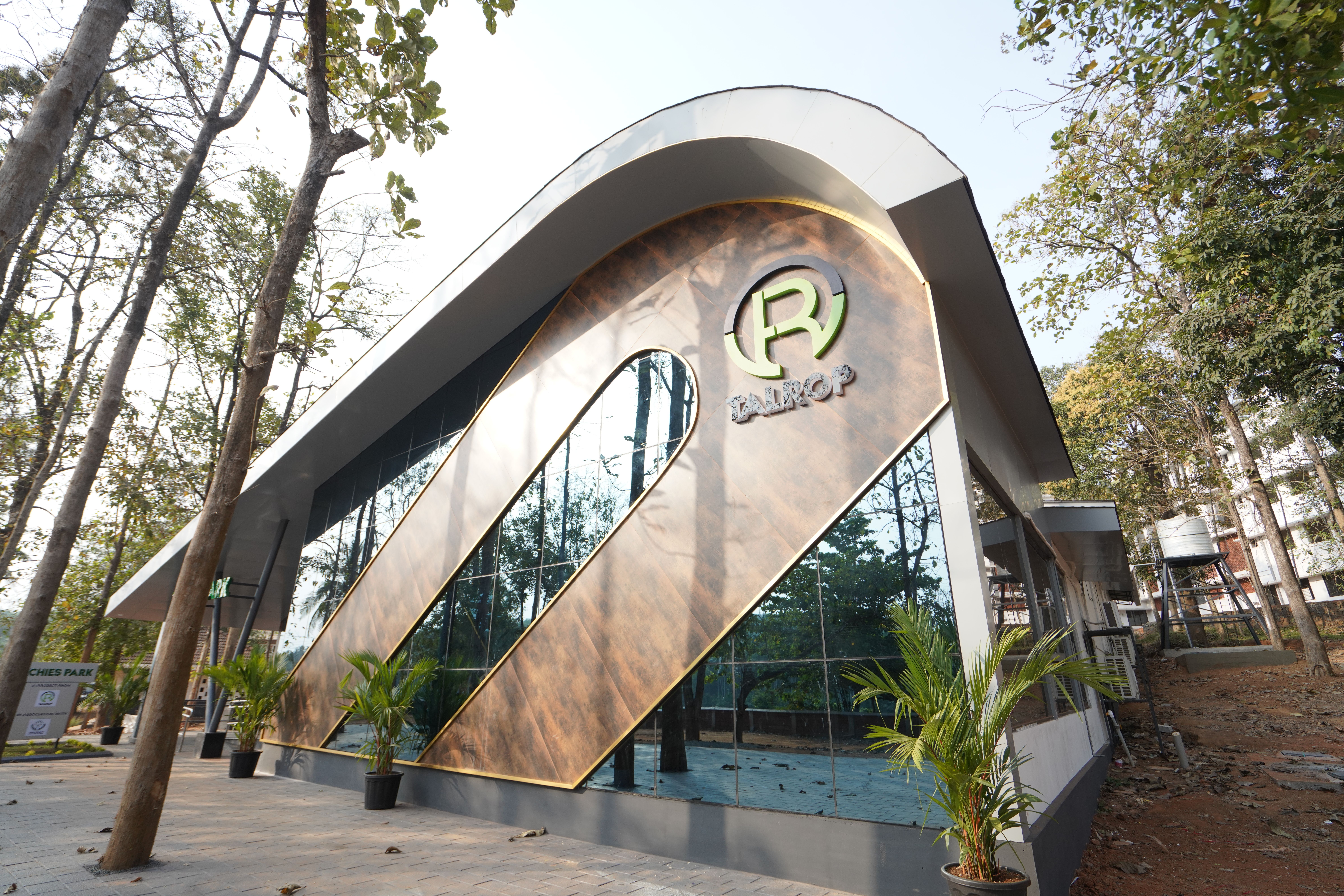
TFB Network is building a connected education-to-industry ecosystem that replaces fragmented, theory-only campuses with a structured network of Inventor Parks inside schools, Techies Parks inside colleges, and Future Technology Campuses across every district that integrate international university programs with industry-first training. This is not a chain of computer labs. It is a real estate infrastructure mission to make every campus an industry hub.
The Problem
Educated but Unemployable: An Infrastructure Failure
Kerala educated millions but built no bridge between classrooms and industries. The numbers prove the failure is structural, not individual.
29.9% Youth Unemployment
Kerala records the highest youth unemployment rate among all Indian states, nearly three times the national average of 10.2%. Among educated women aged 15 to 29, unemployment exceeds 47%.
22.98 Lakh Job Seekers
As of August 2025, 22.98 lakh people are registered on Kerala's employment exchanges. 94.47% hold SSLC or above. 63.89% are women. This is overwhelmingly an educated unemployment crisis.
Only 42.6% Employable
Mercer-Mettl's Graduate Skill Index 2025 found that only 42.6% of Indian graduates are employable by industry standards. Only 10% of 1.5 million engineering graduates secure jobs in their graduation year.
Wrong Field Employment
A significant proportion of employed graduates work in sectors entirely unrelated to their qualifications. Civil engineers become sales executives. Biotech graduates staff call centers. Campuses prepare students for exams, not industries.
5-10 Year Curriculum Lag
University syllabi are updated once every five to seven years. Industries transform every eighteen months. Only 2.5% of Indian engineers possess AI skills. Less than 5% of the workforce has received formal vocational training.
Zero Industry Exposure
Most students complete their entire degree without visiting a working technology company, contributing to an open-source project, or building a product that serves real users. Colleges produce job seekers, not job creators.
The Market Gap
Demand Without Supply
Industries are desperate for skilled professionals. Graduates are desperate for jobs. Neither can find the other.
1 Million+
Engineers needed in AI and emerging tech within 2-3 years (NASSCOM)
30%
Expected demand-supply gap for digital talent by 2028
2.5%
Indian engineers with demonstrable AI skills
5%
Workforce with formal vocational training (vs 60-80% in developed nations)
The paradox at the heart of Kerala's employment crisis: the technology sector is projected to require over one million engineers with advanced skills in AI and emerging technologies. Yet Indian engineering curricula, particularly at tier-2 and tier-3 colleges where the majority of Kerala's students study, remain anchored to syllabi that are five to ten years behind industry requirements. The result is a workforce that is academically certified but industrially illiterate.
Root Causes
Five Structural Failures
The gap between education and employment is not a skills problem. It is an infrastructure problem.
Curriculum-Industry Disconnect
University syllabi update every five to seven years. Industries transform every eighteen months. By the time a student graduates, the technology landscape has shifted beneath them.
Examination-Driven Pedagogy
The system rewards memorization and penalizes experimentation. Students who can recite definitions of machine learning cannot train a model. Schools are memorizing centers, not experiment labs.
Geographic Concentration
IT parks exist in Thiruvananthapuram, Kochi, and Kozhikode. Graduates from Wayanad, Kasaragod, and Idukki have no access to industry ecosystems without migrating.
No Startup Infrastructure
Colleges produce job seekers, not job creators. There are no incubation facilities, no prototyping labs, no investor access within campuses. Not a single student startup ecosystem exists at scale.
Last-Mile Failure
88.1% of Kerala's workforce holds higher education credentials, the highest in India. Yet the mismatch between education and employability affects a larger share of the population than in any other state. Degrees without industry integration are economically destructive.
Myths vs Reality
Two Dangerous Myths That Must Be Dismantled
Industry knowledge can be acquired in the last semester or a six-month internship.
MIT Media Lab, Stanford d.school, Israel's Magshimim program, and Japan's KOSEN system all prove the same principle: industry readiness is built over years of progressive, hands-on exposure, not through a last-minute crash course. Israel trains high school students through three years of intensive sessions. Graduates emerge with skills comparable to American college juniors. Japan's KOSEN begins at age 15; graduates receive over 20 job offers each. A six-month internship doing routine tasks cannot replace years of building, failing, and shipping real products.
AI will replace all jobs anyway, so early learning is pointless.
AI does not eliminate work. It eliminates routine work. 46% of graduates are now employable in AI and machine learning roles, reflecting surging demand. Every major technology shift in history has created more jobs than it destroyed, but the new jobs require different skills. Students who learn AI, robotics, and automation early are not learning skills that will become obsolete. They are learning the foundational literacy of the 21st-century economy. The risk is not in learning too early. The risk is in learning too late.
The Solution
Three Layers of Infrastructure, From School to University
Not more classrooms. A connected, industry-integrated ecosystem that transforms every campus into a launchpad.
| Tier | Infrastructure | Space | Deployment Level | Target |
|---|---|---|---|---|
| School Level | Inventor Park | 1,500-6,000 sqft | Every Assembly Constituency | 140 |
| College Level | Techies Park | 2,000-10,000 sqft | Every Assembly Constituency | 140 |
| University Level | Future Technology Campus | 10 Acres | Every District | 14 |
| Total | Full State Coverage | 294 |
Inventor Park: R&D Labs Inside Every School
Assembly Constituencies (Schools)
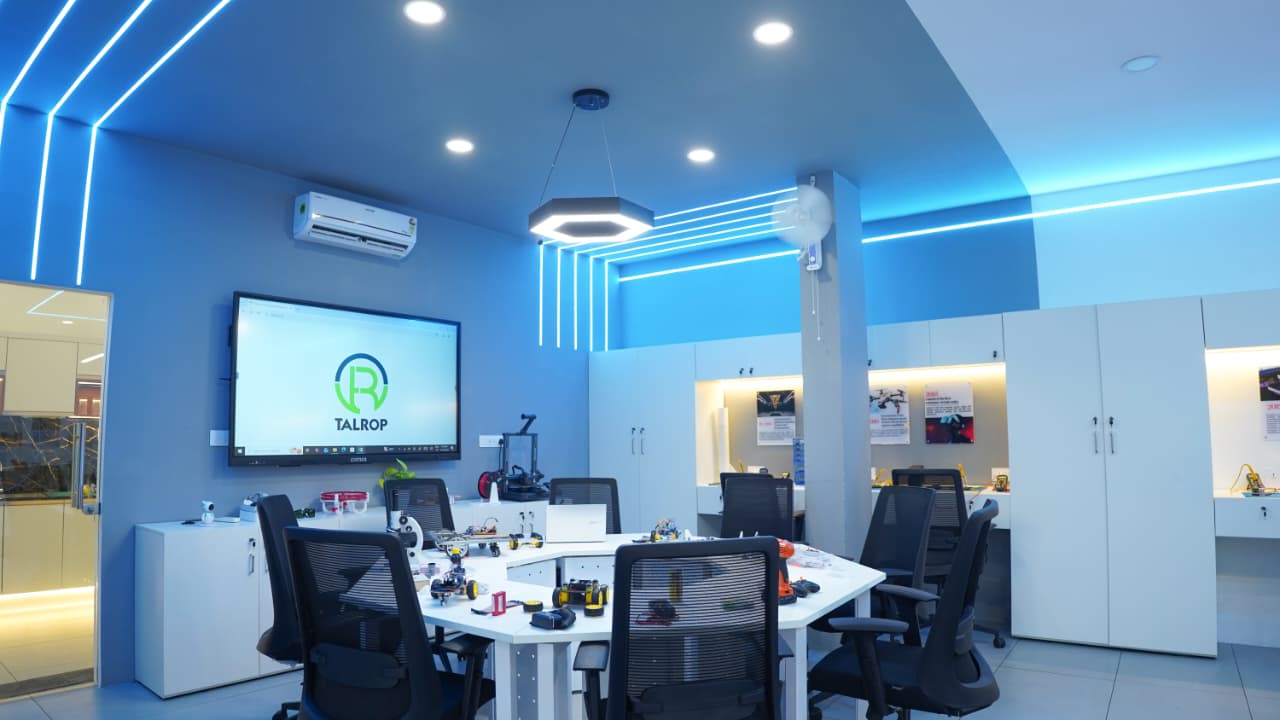
The Inventor Park is not another school lab. It is a professional R&D facility inside schools where students work as true inventors, tackling real-world problems, designing solutions, and building functional prototypes. Full-time industry professionals provide daily mentorship, bridging academic knowledge with real-world practice. The facility is fully modular, allowing any combination of labs to be implemented at the chosen tier.
Specialized Labs
6
Configuration Tiers
3
Target by 2028
140
Currently Operational
3
Lab Facilities
Robotics Lab
55-75 sqm
Design, fabricate, and assemble advanced robotics using Bambu Lab 3D printers, Formlabs Form 3+ SLA printers, 6-axis robotic arms, electronics workbenches with professional oscilloscopes, and ROS2-based autonomous car platforms. Pro configuration includes a 10W laser cutter.
AI Lab
50-70 sqm
Build AI-powered applications using NVIDIA Jetson hardware and custom machine learning models. High-end AI model training PCs with dedicated GPU acceleration, Apple iMac workstations, and dual-monitor setups at every station in Pro configuration.
Space Lab
45-65 sqm
Aerospace engineering in the classroom. Celestron 8SE computerized GoTo telescopes, planetarium setups, rocket launch sets with beginner to advanced avionics. Pro configuration provides 1:1 student-to-avionics ratio with extensive rocket motor stockpile for flight testing.
VR Lab
38-58 sqm
Create immersive digital worlds with Meta Quest 3 headsets and Pimax Crystal professional VR systems alongside high-end development PCs. Students design and build AR/VR applications and spatial computing experiences.
Science Lab
55-75 sqm
University-level physics in schools. Mechanics, thermodynamics, optics, and circuits at Basic tier. Photoelectric Effect demonstrators, Hertzian Waves apparatus, and optical benches at Plus. Quantum physics demonstrators at Pro.
Innovation Lab
Junior Innovators Program. Students form teams, identify real-world problems, design solutions, build prototypes, and present to industry mentors. Cultivates problem-solving, project management, and the ability to turn challenges into opportunities.
Operational Inventor Parks
3 operational. 15+ under construction. 140 target by 2028.
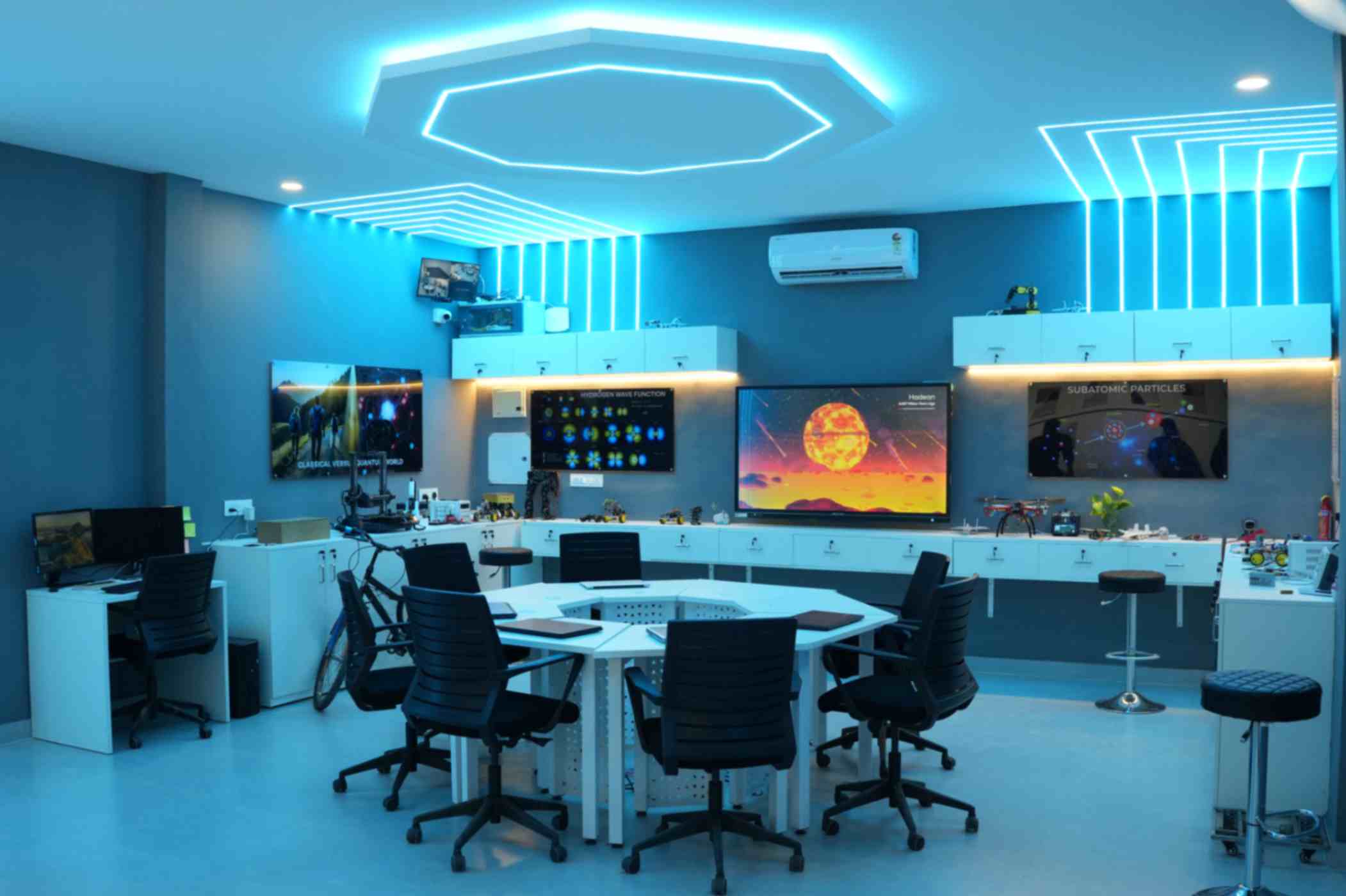
Lekshmi Vilasom High School
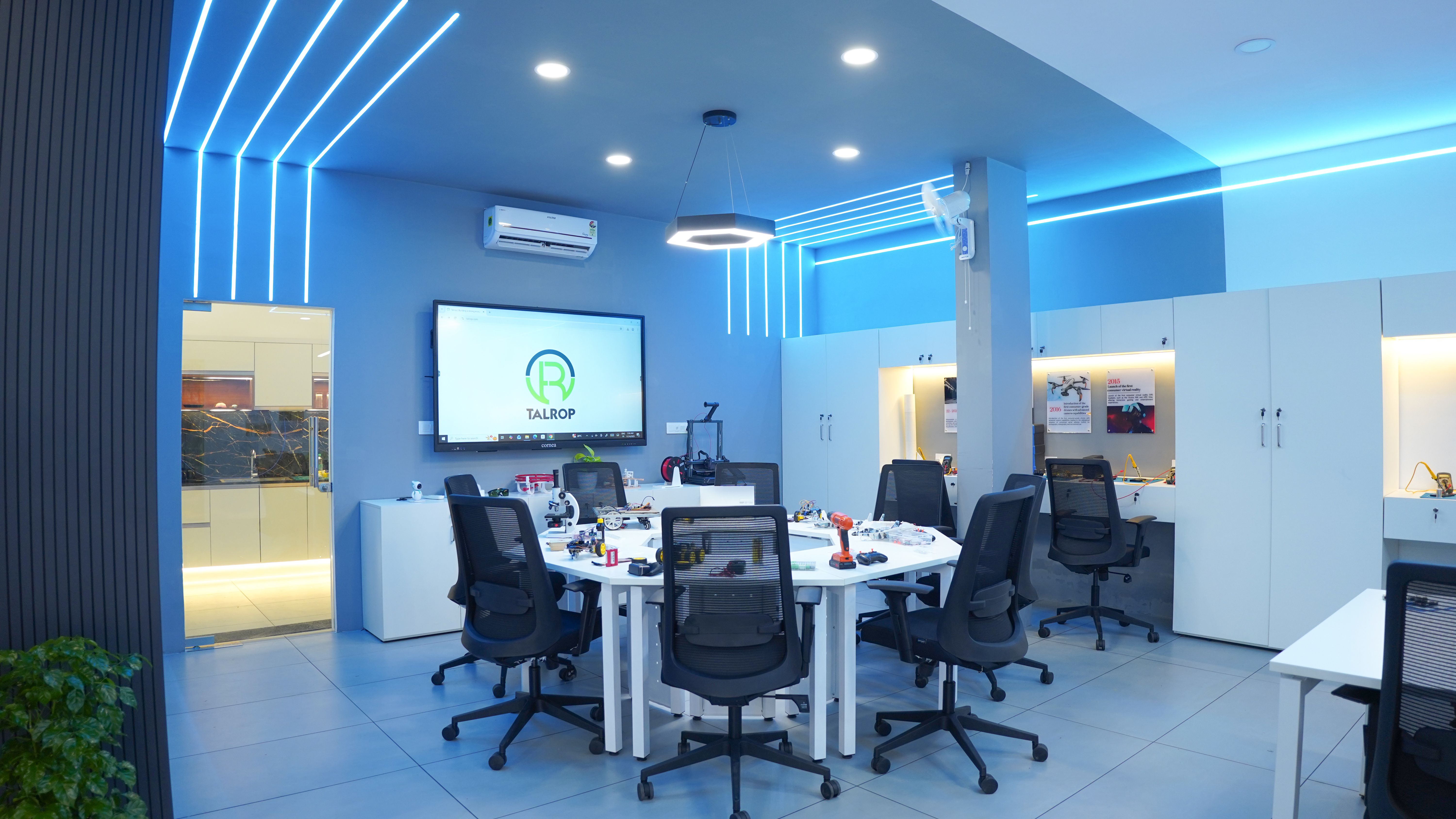
NMM HSS Chelambra
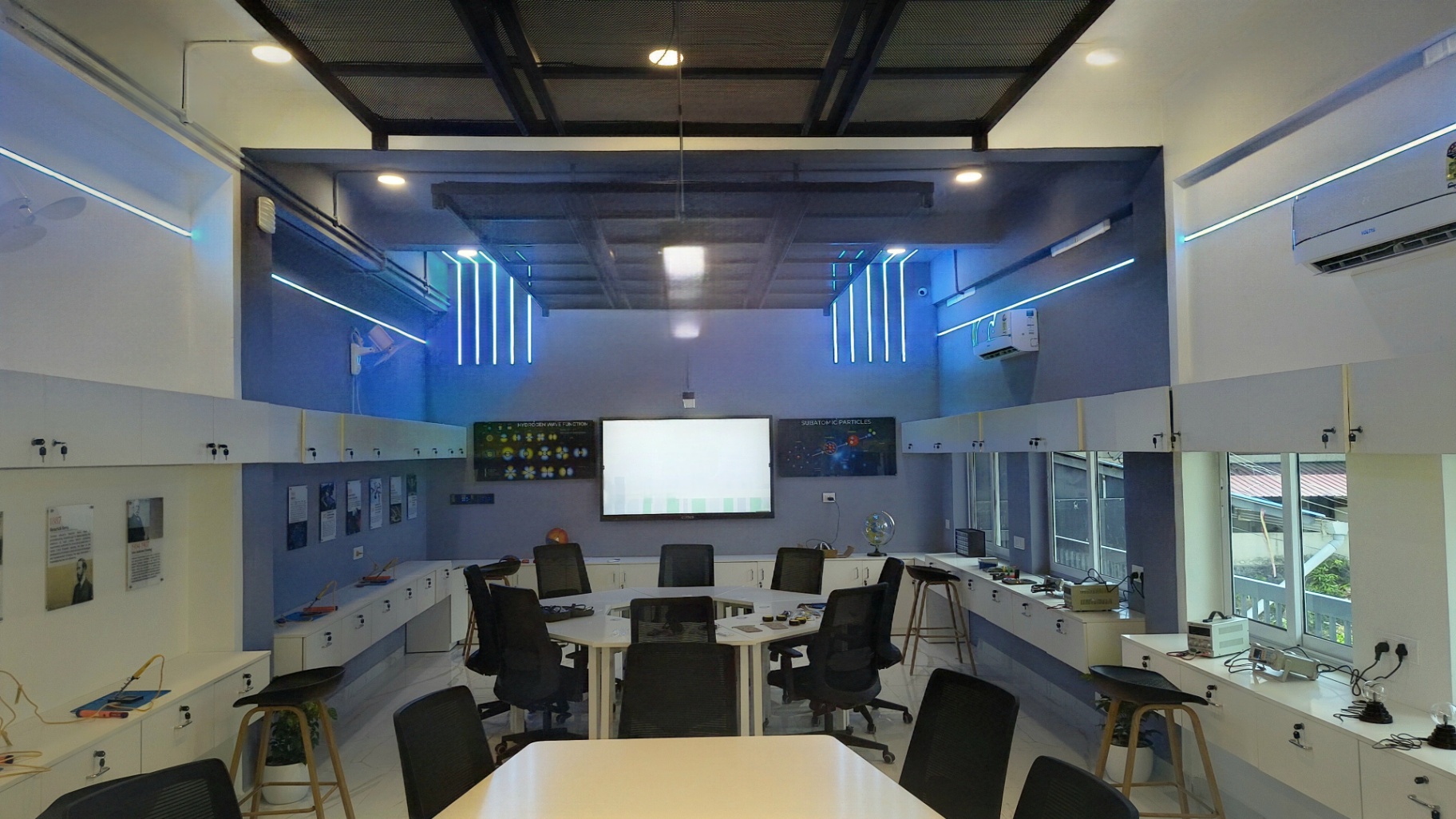
MMUP School
Techies Park: Industry Hubs Inside Every College Campus
Assembly Constituencies (Colleges)
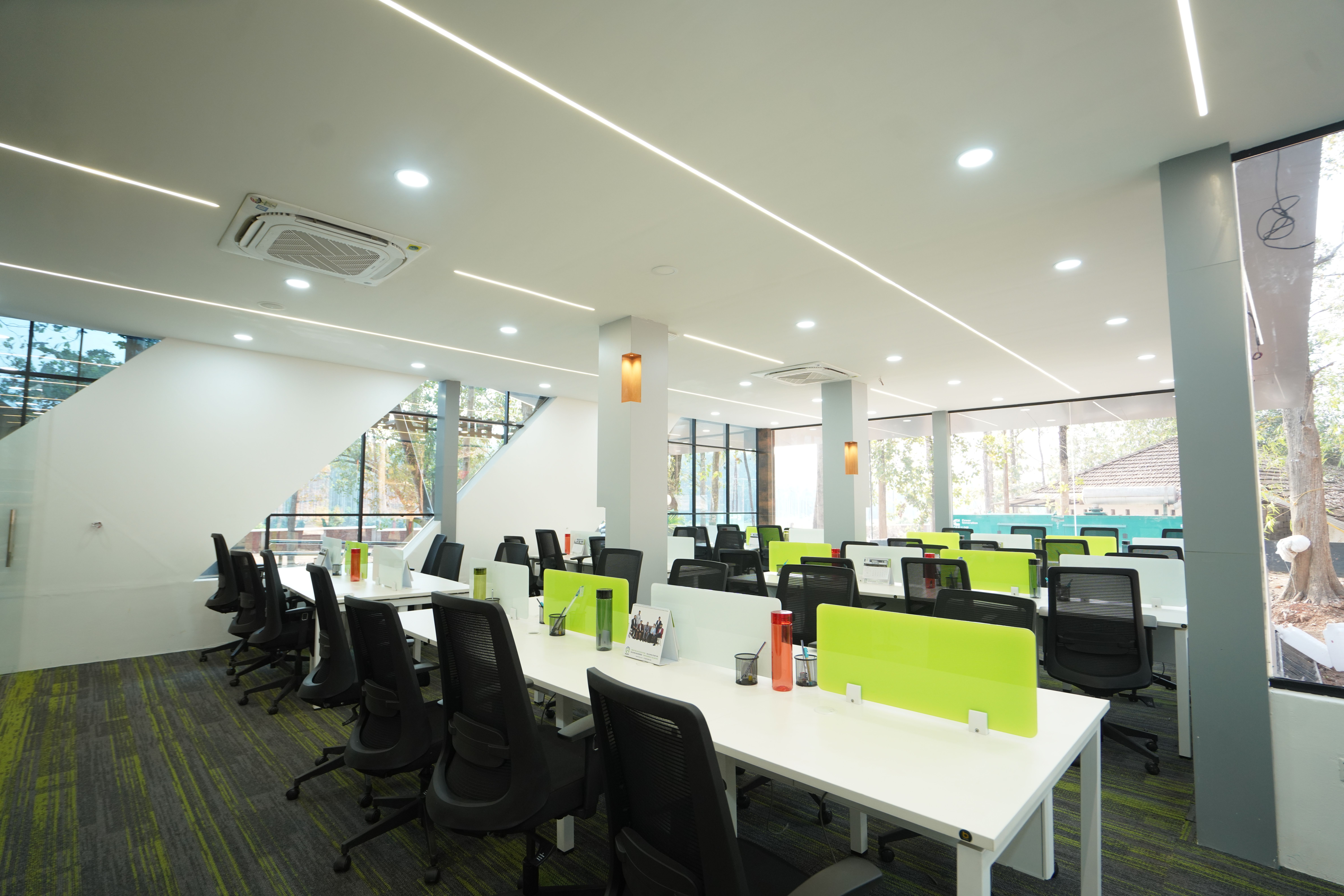
If Inventor Park transforms schools into experiment labs, Techies Park transforms colleges into industry ecosystems. Students cannot become industry-ready by studying industry from a distance. They must be immersed in it. Techies Park is a functioning industry environment where companies, founders, and students work side by side.
Core Facility Zones
6
Square Feet Per Hub
2K-10K
Target by 2028
140
Currently Operational
8
Facility Zones
Incubation Lab
Dedicated space for student startups with prototyping equipment, 3D printers, electronics workbenches, and access to legal, IP, and funding advisory support.
Research Space
Equipped for deep-tech R&D projects in AI, IoT, robotics, and emerging technologies, with industry-grade computing infrastructure.
Community Space
Open-floor collaborative areas where hackathons, demo days, investor pitches, and technology workshops bring students, professionals, and founders together.
Meeting and Discussion Spaces
Professional meeting rooms with video conferencing for remote collaboration with industry partners, global teams, and mentors.
Workspace
Co-working stations where technology professionals from external companies operate, creating organic interaction between working professionals and students.
Hangout Space
Informal zones designed for the unstructured conversations that seed the best ideas, because innovation rarely happens in scheduled meetings.
Operational Techies Parks
8 operational. 30+ under construction. 140 target by 2028.
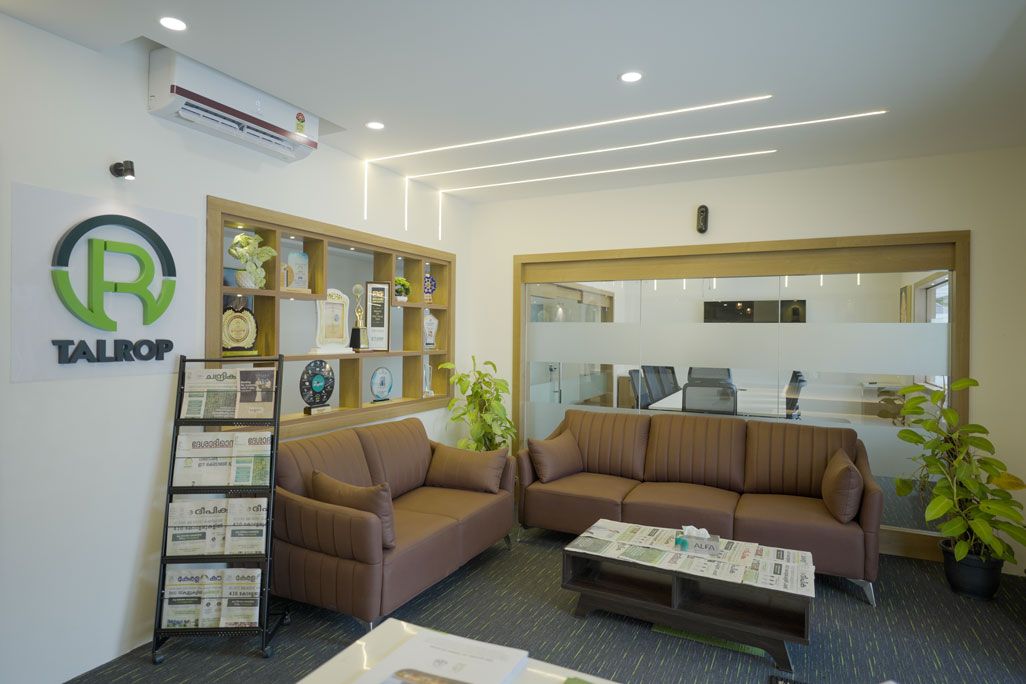
WMO English Academy
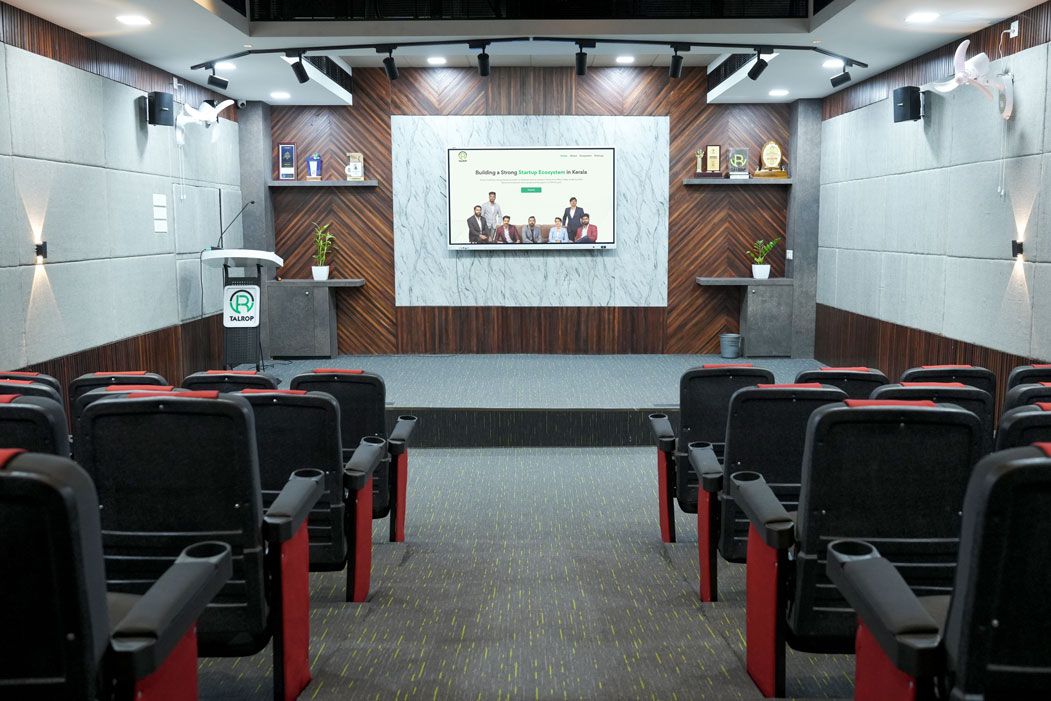
NAHER Arts & Science College
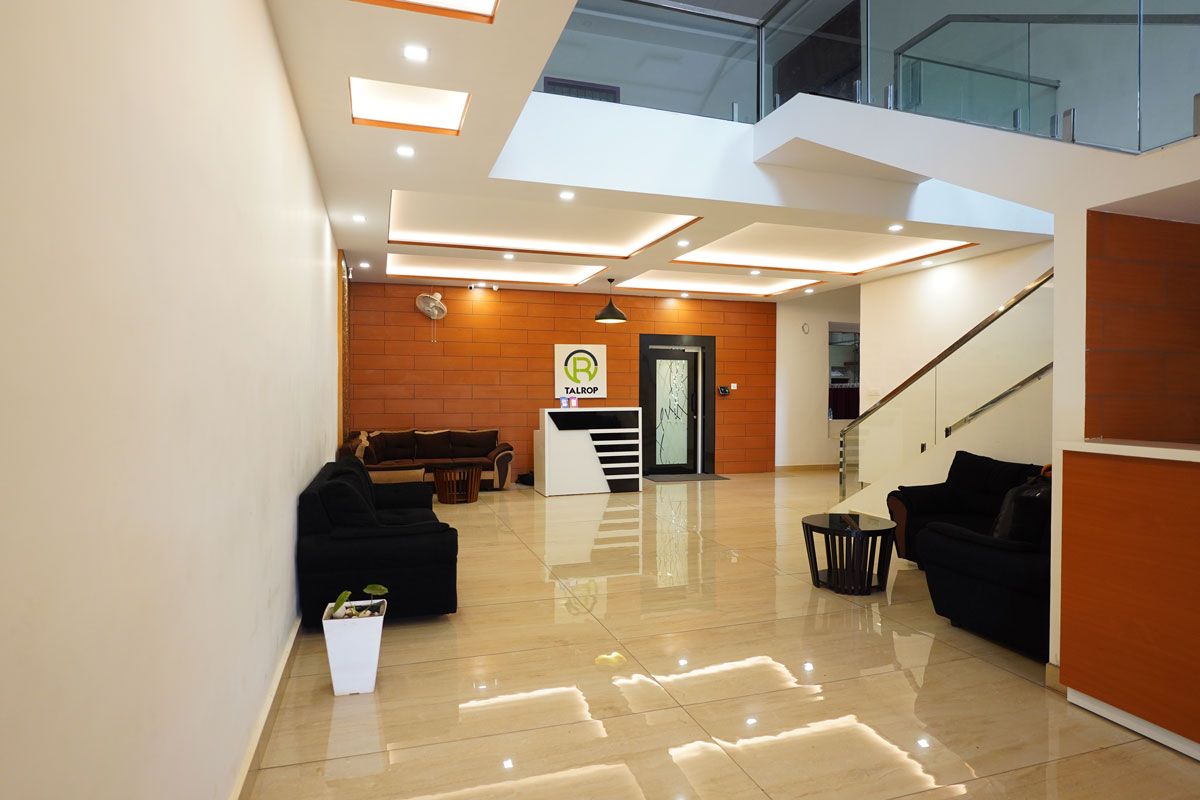
Christ College of Engineering
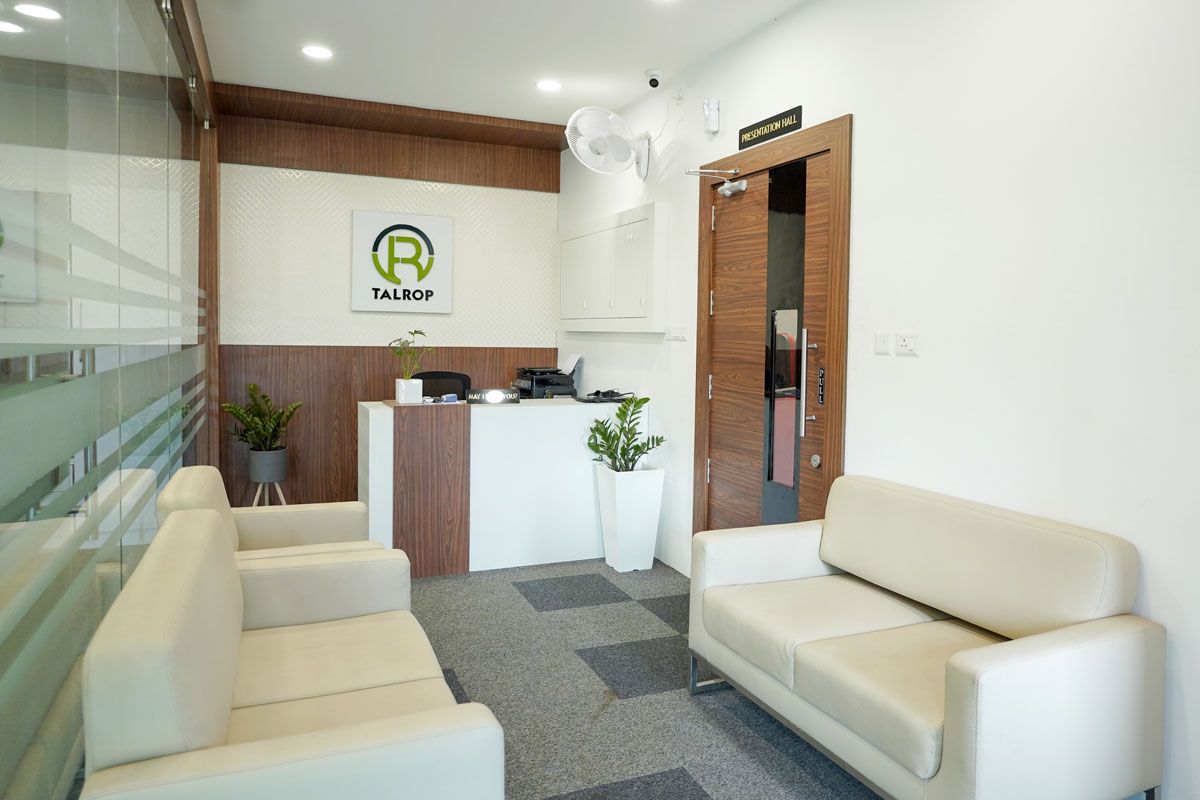
LVHS Campus
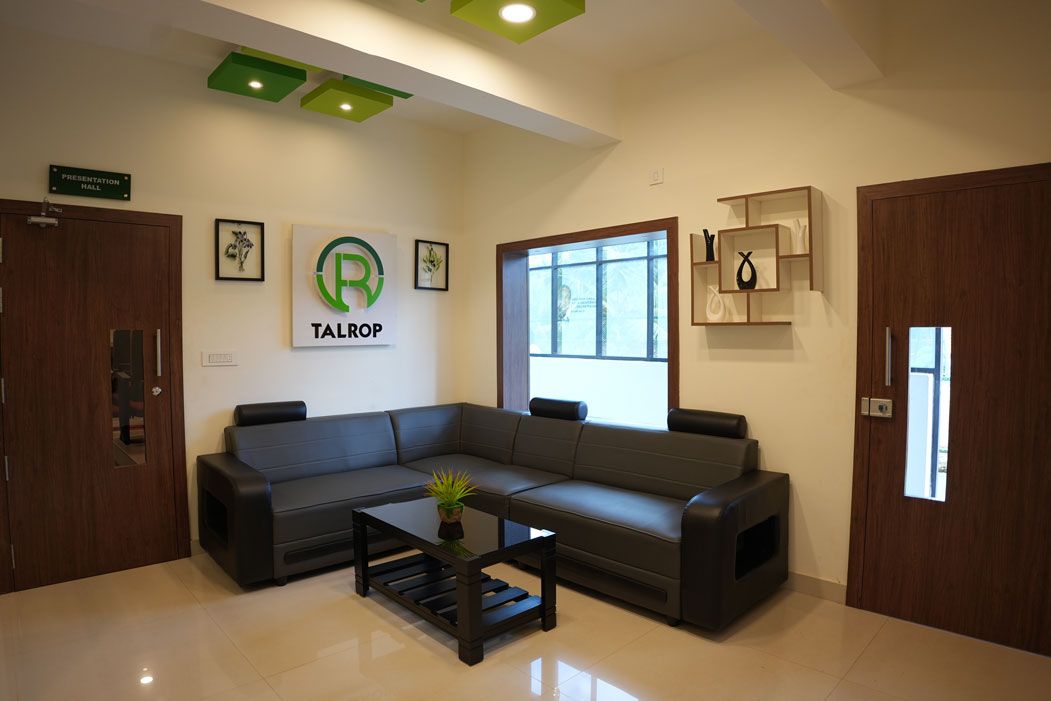
NA Model Campus
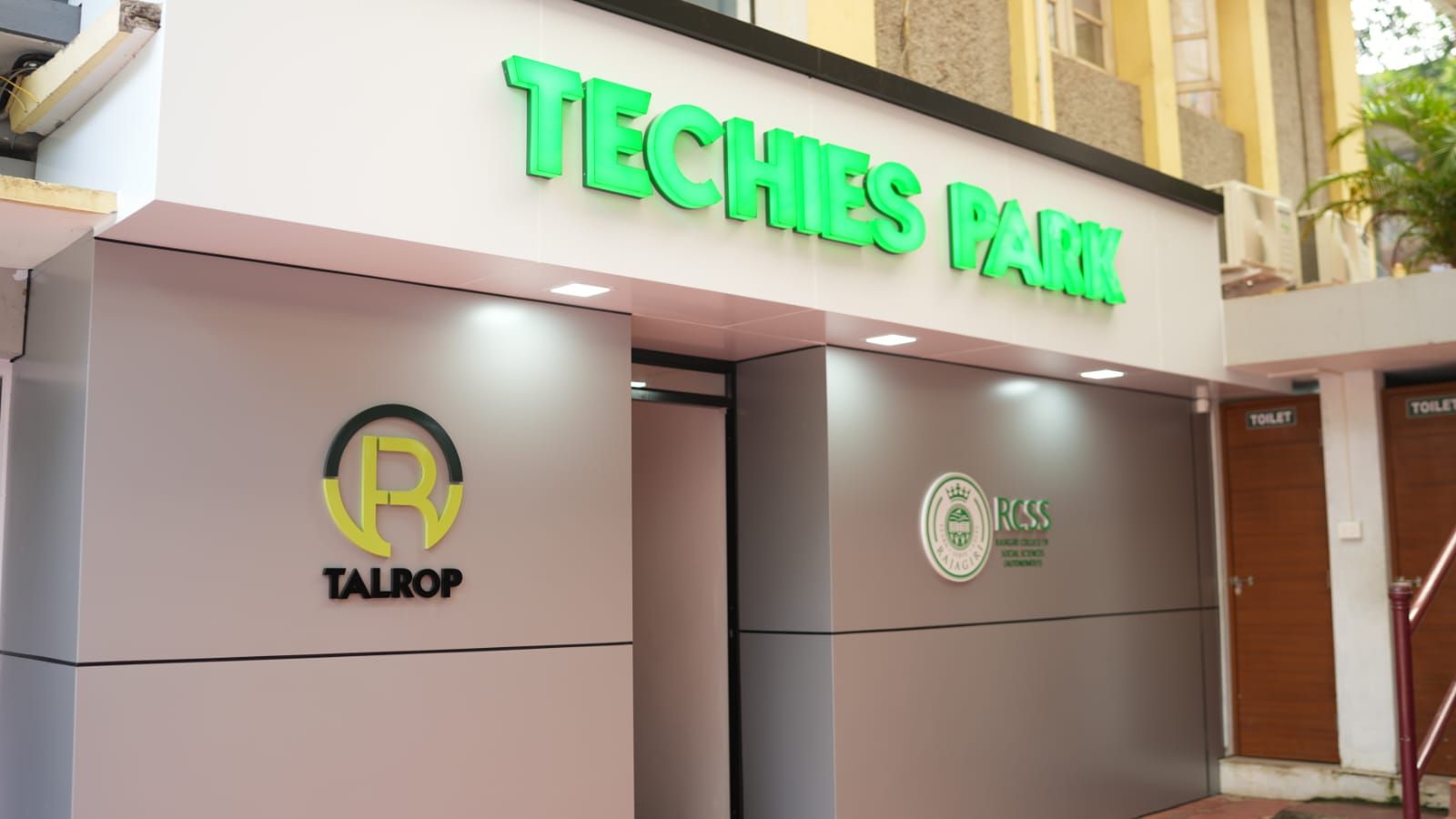
Rajagiri College of Social Sciences
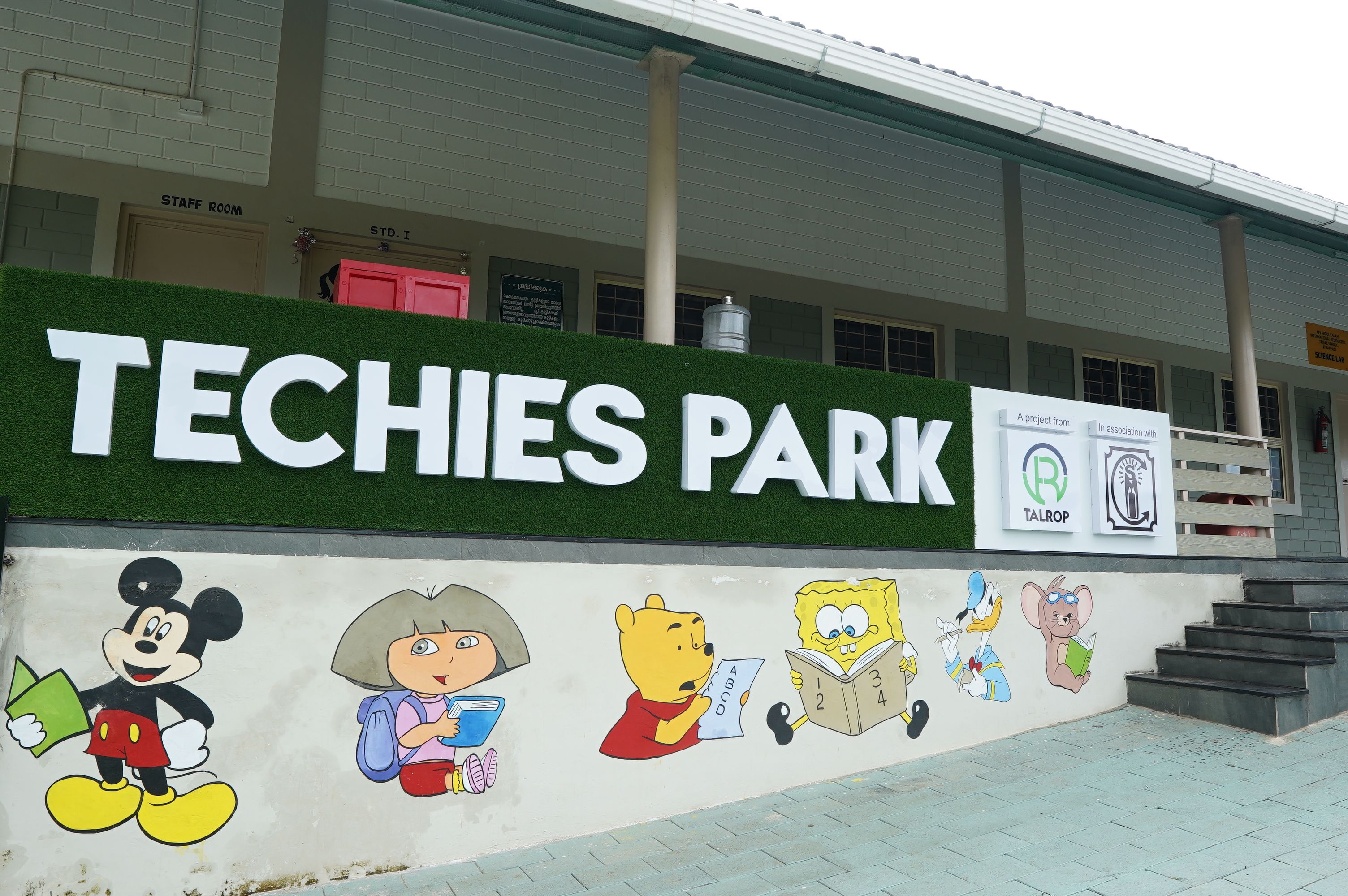
APJ Abdul Kalam International Tribal Residential Campus
Amal College of Advanced Studies
The Difference
What Makes This Different From a Computer Lab
A computer lab is a room with machines. Inventor Parks and Techies Parks are systems.
Industry-Grade Equipment
Not educational toys. Bambu Lab 3D printers, Formlabs SLA systems, NVIDIA Jetson hardware, Pimax Crystal VR, Celestron telescopes, and robotic arms. The same tools professionals use.
Full-Time Industry Mentors
Not visiting lecturers. Full-time professionals embedded within the campus providing daily mentorship, bridging academic knowledge with real-world practice.
Students Build, Not Memorize
No predetermined experiment outcomes. Students identify problems, design solutions, fabricate prototypes, and present to industry panels. Creation replaces consumption.
Companies Work Alongside Students
Techies Parks bring working professionals into college campuses. Students participate in sprint planning, code reviews, and product launches with real engineering teams.
From Job Seekers to Job Creators
Building startups is not an elective. It is structural. Students build startups, pitch to investors, and launch ventures before graduation through incubation labs and Junior Innovators programs.
Centrally Managed, Turnkey Operations
All staffing, maintenance, equipment upkeep, and program delivery handled end-to-end. Schools and colleges participate with zero administrative burden through a revenue-sharing model.
The Scale
294 Innovation Hubs by 2028
One Inventor Park and one Techies Park in every assembly constituency, and one Future Technology Campus in every district of Kerala.
| Infrastructure | Operational | Under Construction | 2028 Target | Coverage |
|---|---|---|---|---|
| Inventor Parks (Schools) | 3 | 15+ | 140 | Every Assembly Constituency |
| Techies Parks (Colleges) | 8 | 30+ | 140 | Every Assembly Constituency |
| Future Technology Campus | Planning | - | 14 | Every District |
| Total | 11 | 45+ | 294 | Full State Coverage |
11
Hubs Operational Today
45+
Under Construction
294
Total Target by 2028
140
Assembly Constituencies Covered
Beyond Kerala
Building Pathways to Global Opportunities
In the era of globalization, exploring jobs exclusively in one's hometown is no longer viable. The next generation must be equipped for global competitiveness.
Partnering with Global Skill Brands
Establishing partnerships with internationally recognized skill certification brands to build dedicated institutions across Kerala's districts. Branded, accredited facilities delivering industry-recognized certifications in cloud computing (AWS, Azure, GCP), cybersecurity (CompTIA, EC-Council), data science (IBM, Google), full-stack development, AI engineering, and digital marketing. Each center serves as a gateway for Kerala's graduates to compete for global opportunities.
Next-Generation Industry-First Campuses
Campuses where the curriculum is designed backwards from industry requirements. Every course includes live projects, industry mentorship, and portfolio-building from the first semester. Technology parks, incubation facilities, and co-working spaces integrated within the campus boundary, ensuring seamless transition from learning to producing.
Future Technology Campuses (14 Districts)
Built in association with Steyp, 14 integrated campuses across every district of Kerala that bring international university programs together with industry-first training. Students complete undergraduate degrees on campus with curriculum co-designed by international partners and industry stakeholders. For postgraduate study, students transition to the international partner campus abroad. Best of both worlds: industry-integrated education in Kerala, global credentials and career networks through international partners.
The Campus
Future Technology Campus
14 integrated campuses across every district of Kerala, where international education meets industry-first training.
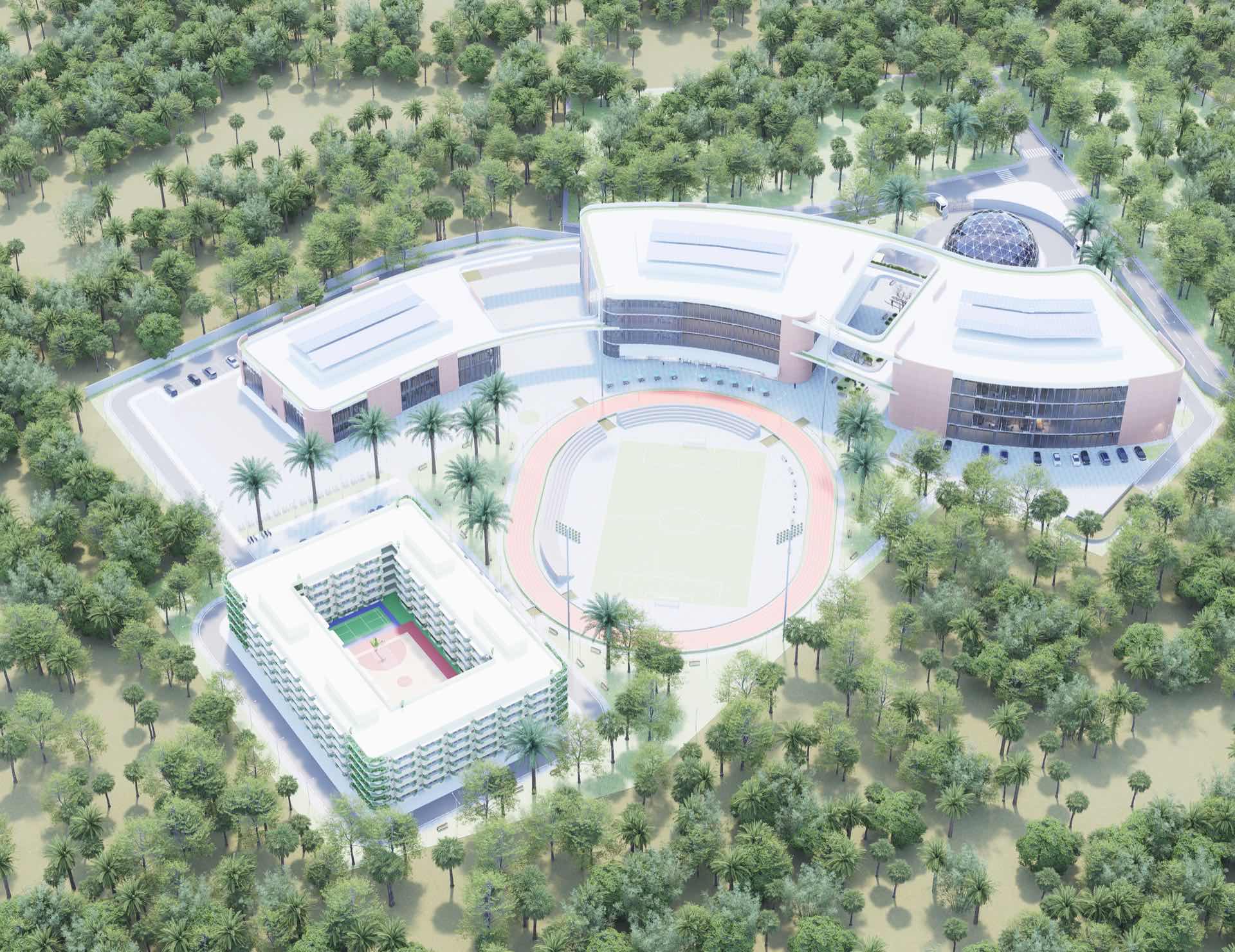
Future Technology Campus
One in every district of Kerala
Campus Facilities

Residential Campus with Modern Student Housing

Dedicated Game Center and Recreation Facilities

Industrial-Grade Robotics and AI Laboratory

Mechanical and Electronics Laboratory

Smart Classrooms with AI-Assisted Learning

Startup Incubation Center

International Collaboration Hub

Landscaped Open Spaces and Sports Facilities

Healthy Food Court and Wellness Center

Amphitheater and Event Spaces
UG in Kerala
Rigorous, industry-integrated foundational education on Future Technology Campuses across every district. Curriculum co-designed with international university partners. Daily industry immersion through on-campus Techies Park. Portfolio of real projects built from semester one.
PG Abroad
Transition to international partner campuses in the UK, Australia, Europe, or North America. Global exposure, international credentials, overseas career networks. Students graduate with degrees recognized worldwide and professional experience from both ecosystems.
Gallery
The Pathway
From School Lab to University
No breaks. No gaps. No stage at which a student falls out of the system because the infrastructure stopped serving them.
Discovery
Inventor Park introduces hands-on science, robotics, and coding through play-based learning. Students explore, break things, and rebuild. Curiosity is the curriculum.
Building
Structured project-based modules in AI, robotics, spatial computing, and aerospace engineering. Students build functional prototypes and present to industry mentors through the Junior Innovators Program.
Creating
Advanced R&D projects. Students work as true inventors, tackling real-world problems. Portfolio-ready skills in AI, VR, robotics, and space science. Startup mindset cultivation through student startup teams.
Industry Immersion
Techies Park inside the college campus. Students sit next to working engineers, participate in sprint planning, build products for real markets. Incubation lab access for student startups. Industry certifications through global skill brand partnerships.
Global Launch
Future Technology Campuses across every district for industry-first UG programs. Transition to international partner campuses for PG. Global career placement through combined Kerala + international credentials and networks.
The Mission
What We Are Building
We are building 140 Inventor Parks inside schools, transforming classrooms into R&D laboratories where students build robots, train AI models, launch rockets, and create virtual worlds.
We are building 140 Techies Parks inside colleges, embedding functioning industry ecosystems within campuses where students and companies work side by side.
We are building 14 Future Technology Campuses across every district of Kerala, integrating international university programs with industry-first training, making global education accessible without leaving the state.
We are making industry education accessible and children future-ready, assembly constituency by assembly constituency, campus by campus, student by student.
From school lab to university, the journey of Kerala's next generation begins with the spaces we build for them today.
TFB Network